How a React Native App Development Company Builds Scalable Apps


Mobile apps have become an important part of business growth. Whether it is an eCommerce store, healthcare platform, fintech app, food delivery solution, or enterprise application, users expect apps to be fast, secure, easy to use, and available on both Android and iOS. For businesses, this creates a major challenge: how to build a high-quality app without spending too much time and money on separate native development.
This is where React Native becomes a strong choice. React Native helps businesses build cross-platform mobile applications using a shared codebase. With the right planning, architecture, and development approach, a professional React Native app development company can build scalable apps that support business growth, handle increasing users, and adapt to future requirements.
A skilled company does more than just write code. It understands business goals, plans the right features, builds a strong technical foundation, optimizes performance, integrates secure APIs, and provides long-term maintenance. This complete approach helps create scalable React Native apps that are ready for real-world use.
Why React Native Is Suitable for Scalable Mobile Applications

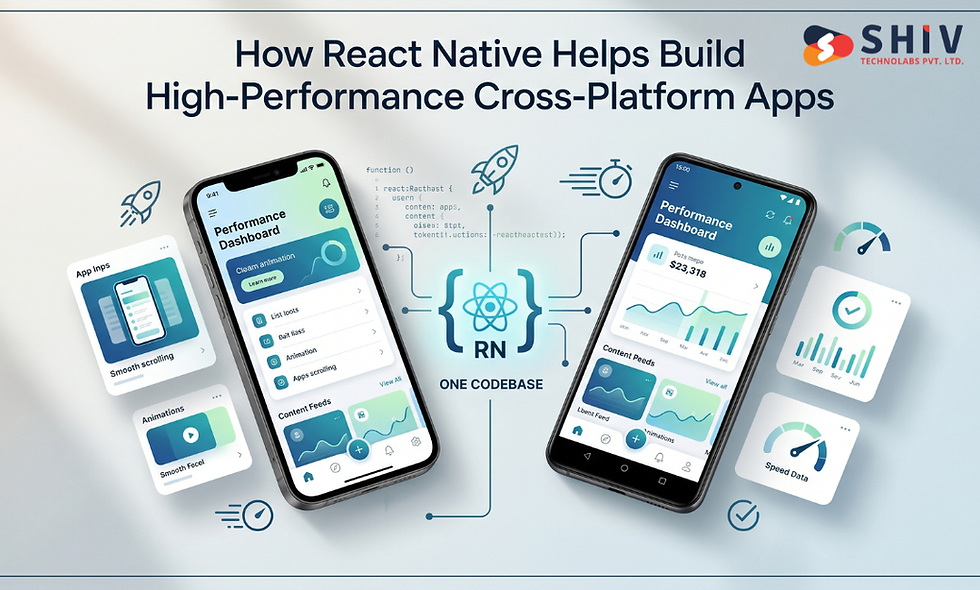
React Native is widely used for building scalable mobile applications because it allows developers to create apps for both Android and iOS with one codebase. This helps businesses save development time, reduce costs, and launch products faster.
For startups, React Native is useful because it supports faster MVP development. For enterprises, it helps maintain large mobile applications with reusable components and flexible architecture. A professional React Native mobile app development team can use this framework to build apps that are easy to upgrade, maintain, and scale.
React Native also supports third-party plugins, native modules, API integrations, cloud services, push notifications, analytics tools, payment gateways, and many other features required in modern apps. These capabilities make it a strong option for businesses looking for cost-effective app development without compromising app quality.
In simple terms, React Native is suitable for scalable apps because it offers speed, flexibility, code reusability, and cross-platform support.
Key Architecture Decisions That Help Build Scalable React Native Apps

Component-Based Modular Design
Experienced React Native development teams build apps with atomic component libraries. Each UI element is isolated, reusable, and testable. This matters because when a product evolves, you change one component, not a hundred files.
State Management Strategy
For apps beyond basic complexity, global state management using Redux Toolkit, Zustand, or React Query is non-negotiable. The choice depends on data flow patterns. Real-time apps benefit from React Query for server-state sync. Redux works well for apps with complex client-side logic.
Navigation Architecture
React Navigation v7 (current standard as of 2025) supports deep linking, tab structures, and modal flows. A cross-platform app development company will plan navigation architecture upfront because retrofitting it later is expensive.
API Layer Separation
The API call logic always sits in a dedicated service layer, separate from UI components. This keeps components clean and makes backend changes manageable without touching every screen.
The React Native App Development Process: Step by Step
Phase | Activities | Typical Duration |
Discovery & Planning | Requirement analysis, architecture blueprint, tech stack finalization | 1-2 weeks |
UI/UX Design | Wireframes, prototypes, and design system creation | 2-3 weeks |
Core Development | Feature modules, API integration, state management | 6-12 weeks |
Testing & QA | Unit tests, integration tests, device testing | 2-3 weeks |
Deployment | App Store + Play Store submission, CI/CD setup | 1-2 weeks |
Post-Launch Support | Bug fixes, performance monitoring, update cycles | Ongoing |
The React Native app development process works well when all phases are planned before a single line of code is written. Companies that skip discovery end up rebuilding features midway through development.
Related article: React Native App Development vs Native Apps: A Clear Comparison
What Cross-Platform App Development Really Saves You in 2026
The financial argument for React Native is strong, but the numbers depend on project scope, team location, and feature complexity. Below are realistic 2026 market estimates based on current agency pricing for production-grade work.
React Native vs Native Development Cost Comparison (2026)
App Type | Native iOS + Android | React Native | Estimated Savings |
Simple app (8-12 screens) | $45,000 - $75,000 | $22,000 - $42,000 | 35-45% |
Mid-complexity app (15-25 screens) | $90,000 - $160,000 | $50,000 - $95,000 | 38-42% |
Feature-rich product app | $160,000 - $250,000 | $90,000 - $150,000 | 35-40% |
Enterprise-grade app | $280,000+ | $130,000 - $200,000 | 30-38% |
Time-to-market improves by 30-40% on average compared to building two separate native apps. For startups and growing businesses, that window often determines whether a product captures a market or loses it to a faster competitor.
React Native app development solutions make the most economic sense when your product needs to reach both iOS and Android audiences quickly, without making compromises on performance or user experience.
Key Features of Scalable React Native Apps
Building scalable mobile applications means certain foundational features cannot be added later as an afterthought:
Push Notification Infrastructure: Firebase Cloud Messaging (FCM) with notification categories and deep link support.
Offline-First Capability: Local data caching with WatermelonDB or AsyncStorage, syncing when connectivity returns.
Authentication Flows: OAuth 2.0, biometric login, and token refresh logic built into the app from the start.
Analytics & Crash Reporting: Firebase Analytics or Mixpanel integration alongside Sentry for error tracking.
Multi-Language Support (i18n): React Native i18next for apps targeting global or multilingual markets.
Role-Based Access Control: For B2B apps or platforms with different user types.
These are not premium additions. They are baseline requirements for any app expected to scale past its first few thousand users.
How to Evaluate a React Native App Development Company
Before signing a contract, ask specific questions:
1. What state management approach do you recommend for our app, and why? The answer reveals whether they think about architecture or just write code.
2. How do you handle performance testing across device tiers? Mid-range Android devices catch issues that emulators miss.
3. Do you maintain a CI/CD pipeline for automated builds? Manual deployments are a red flag for any serious project.
4. What is your code review process? Peer reviews and linting standards matter for long-term code quality.
5. Can you share examples of apps you have maintained post-launch? Scalable architecture decisions become visible 12-18 months after launch.
A genuine React Native app development company will answer these questions with specifics, not vague reassurances.
Build Scalable React Native Apps with Shiv Technolabs
Planning to build a scalable mobile app for your business? Shiv Technolabs can help turn your app idea into a reliable, secure, and feature-rich digital solution. As an experienced React Native app development company, we provide end-to-end React Native app development services for startups, enterprises, and growing businesses.
Our team follows a clear and result-driven development approach that includes requirement analysis, UI/UX design, architecture planning, React Native mobile app development, API integration, testing, deployment, and ongoing maintenance. This helps businesses create mobile apps that are not only user-friendly but also scalable, performance-focused, and ready for future growth.
For businesses searching for a trusted cross-platform app development company, Shiv Technolabs can be the right technology partner for building scalable and cost-effective mobile applications. Contact us today to discuss your React Native app development requirements and get expert guidance from our team.
Conclusion
Building scalable mobile apps requires proper planning, strong architecture, reusable components, secure integrations, performance optimization, testing, and continuous maintenance. React Native makes this process more efficient by allowing businesses to build cross-platform apps with a shared codebase.
A professional React Native app development company helps businesses create apps that are ready for current users and future growth. From startups launching MVPs to enterprises building advanced mobile platforms, React Native offers a practical solution for scalable and cost-effective app development.
If your business wants to build scalable React Native apps for Android and iOS, choosing the right development partner is an important step. With expert planning and reliable development support, your app can deliver better performance, smoother user experience, and long-term business value.
Frequently Asked Questions
1. What makes React Native good for building scalable apps?
React Native supports a modular component architecture, reusable code across iOS and Android, and integration with native modules for performance-heavy tasks. When built properly, the codebase scales technically and organizationally as your product grows.
2. How long does React Native mobile app development take?
A standard mid-complexity app typically takes 12-18 weeks from planning to launch. Simple apps can be delivered in 8-10 weeks. Enterprise-grade apps with complex integrations often require 20-28 weeks, depending on backend complexity.
3. Is React Native suitable for enterprise-grade applications?
Yes. Shopify, Microsoft, and Meta use React Native in production at scale. The key requirement is structured architecture, proper state management, and native module integration for performance-critical features.
4. How much does React Native app development cost in 2026?
Development costs in 2026 range from $22,000 for simple apps to $200,000+ for enterprise-grade solutions. A mid-complexity app with 15-25 screens, third-party integrations, and a custom backend typically falls between $50,000 and $95,000. Costs vary based on feature scope, number of integrations, backend complexity, and whether the team is onshore, nearshore, or offshore.


Comments