How React Native Helps Build High-Performance Cross-Platform Apps
- Kishan Mehta

- Jun 10
- 6 min read
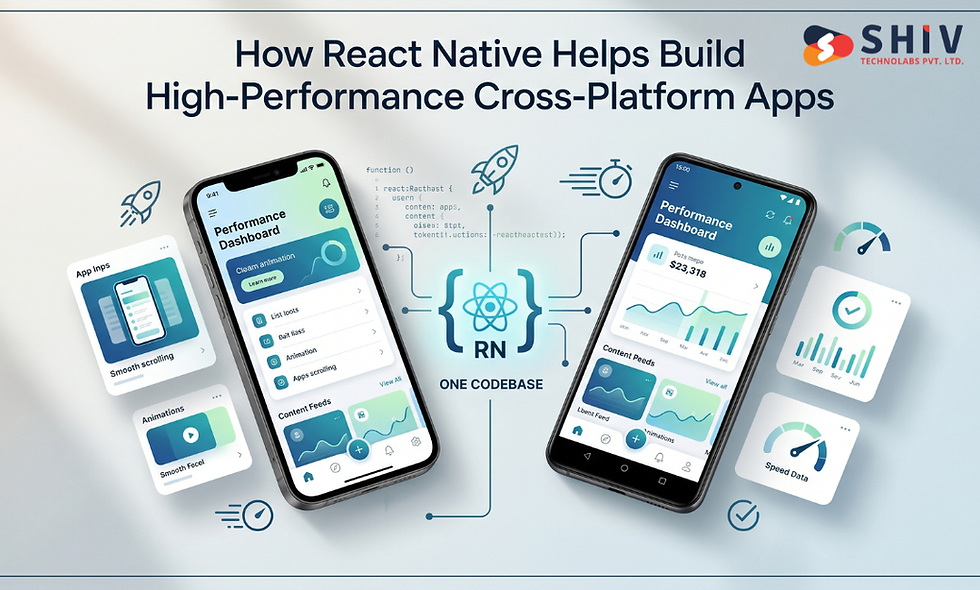
Building a mobile app for both Android and iOS is an important step for businesses that want to reach more users and grow faster. Many companies need a fast app, clean design, useful features, and quick market launch, but separate native app development can increase time, cost, and development effort. This is why startups, enterprises, and digital product owners prefer React Native for cross-platform mobile app development.
React Native allows developers to build mobile apps for both platforms using a shared codebase. It supports native-like performance, a smooth user experience, and faster app updates. With professional React Native app development services, businesses can create reliable Android and iOS apps that work well across devices and support long-term product growth.
What Is React Native App Development?
React Native app development is the process of building mobile apps for iOS and Android using React Native technology. It allows developers to write most of the app code once and use it across both platforms. This helps reduce repeated work and makes the development process faster.
Many businesses choose React Native app development services because they want a practical way to build mobile apps without managing two fully separate codebases. React Native also supports native components, which help apps feel smooth and responsive on mobile devices.
Related Article: Create and Run React Native App without Expo – Get Detailed Info
Why React Native Is Good for Cross-Platform Mobile App Development
React Native is a strong choice for cross-platform mobile app development because it supports both Android and iOS mobile apps with one development approach. Developers can build shared app logic and still add platform-specific features when needed.
This makes React Native suitable for businesses that want faster app launch, better code management, and flexible future updates. It also helps mobile app development teams test, improve, and release new features across both platforms with less extra effort.
Benefits of React Native Cross-Platform Apps
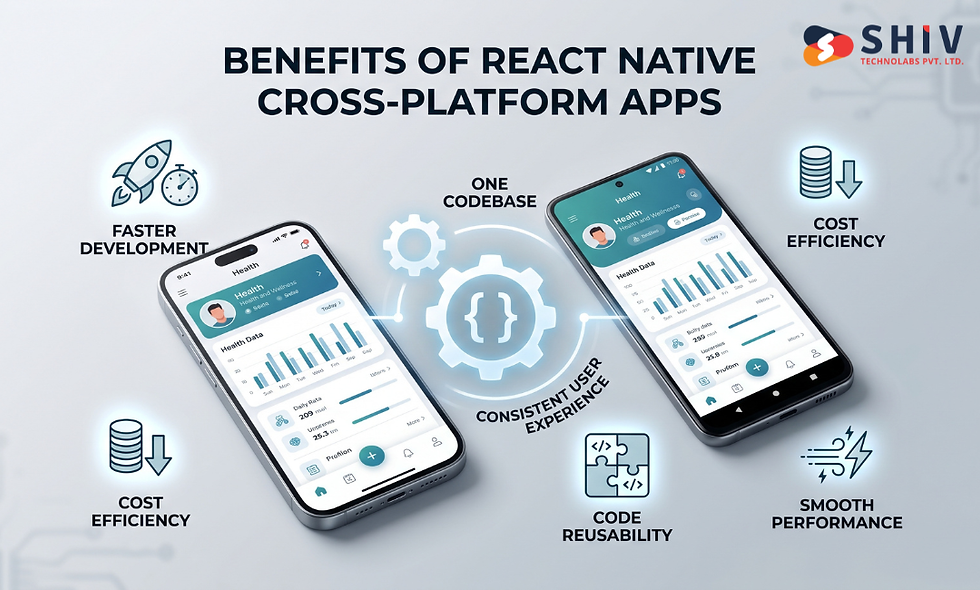
React Native cross-platform apps help businesses save time because developers can reuse a large part of the codebase. This helps reduce development effort and supports faster app delivery for both Android and iOS platforms.
These apps also make updates easier. When a business wants to add new features, fix bugs, or improve app screens, developers can manage changes in a more controlled way. This helps companies maintain their app with better speed and planning.
Key Business Benefits
Faster app development for Android and iOS
Shared codebase for better team productivity
Lower development and maintenance effort
Native-like user experience
Easier app updates and feature additions
Suitable for startups, SMEs, and enterprises
Step-by-Step React Native App Development Process
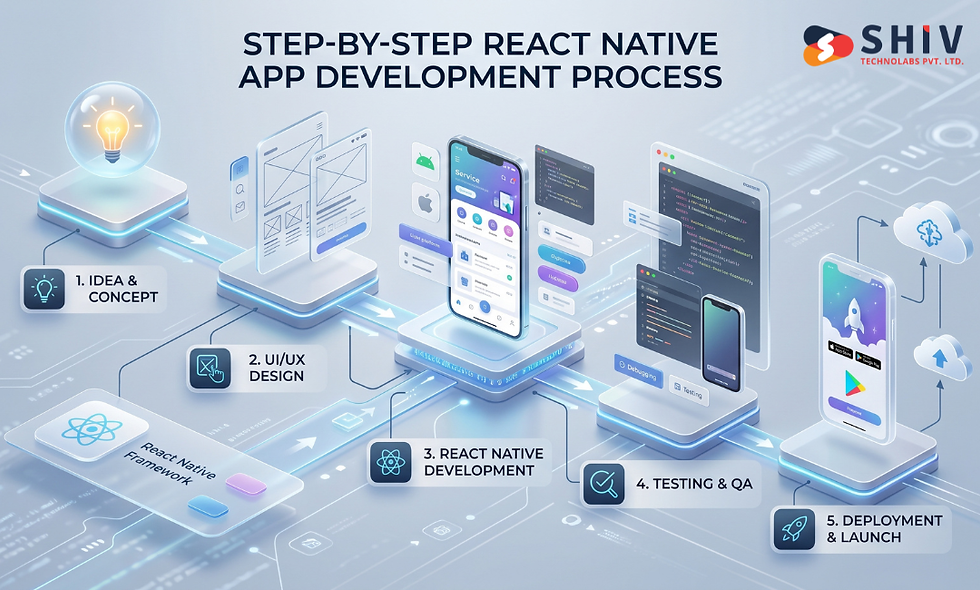
A well-structured custom React Native app development process typically follows these phases:
1. Discovery and Planning (1-2 weeks): Requirement gathering, feature scoping, tech stack selection, and wireframing. This phase sets the project foundation.
2. UI/UX Design (2-4 weeks): Creating platform-specific design systems that respect iOS Human Interface Guidelines and Android Material Design patterns, while maintaining a consistent brand feel.
3. Development (6-16 weeks): Building core features, API integrations, third-party service connections, and device-specific functionality. The timeline depends on app complexity.
4. QA and Testing (2-4 weeks): Functional testing across real devices, performance benchmarking, security audits, and OS version compatibility checks.
5. Deployment and Launch (1-2 weeks): App Store and Google Play submission, store optimization, and post-launch monitoring setup.
React Native App Development Cost and Timeline
Pricing varies based on app complexity, team location, and feature requirements. Below are realistic estimates based on current agency market rates:
App Complexity | Estimated Cost (USD) | Timeline |
Simple App | $10,000 to $25,000 | 6 to 10 weeks |
Mid-Complexity App | $25,000 to $60,000 | 10 to 20 weeks |
Complex App | $60,000 to $120,000+ | 20 to 36 weeks |
Enterprise-Grade App | $120,000 to $200,000+ | 36 to 60 weeks |
These figures apply when working with a professional React Native app development company with experienced developers. Freelancer pricing runs lower but carries higher risk on complex projects.
Ongoing maintenance typically costs 15-20% of the initial development cost per year, covering OS updates, dependency upgrades, bug fixes, and performance improvements.
How to Choose the Right React Native App Development Company
The technology is only as strong as the team implementing it. When evaluating a React Native mobile app solutions provider, focus on these factors:
1. Portfolio depth: Have they built apps in your industry? Ask to see live apps, not just screenshots.
2. Technical capability: Look for teams that have experience with Hermes engine, React Navigation, Redux or Zustand for state management, and REST/GraphQL API integrations.
3. Testing practices: A serious team will have a structured QA process, not just manual testing by developers.
4. Communication and delivery: Agile teams that provide sprint-based progress updates reduce delivery risk significantly.
5. Post-launch support: Ask specifically about what happens after the app goes live. Updates, bug fixes, and OS version compatibility management matter.
Why Businesses Choose React Native Over Flutter or Native Development
The comparison between React Native and Flutter is a common one. Both are solid frameworks. The practical difference often comes down to the development team's existing skills and the project's specific requirements.
React Native has a larger existing developer pool (JavaScript-based), better integration with web codebases, and stronger library support for business-specific tools. Flutter offers better UI consistency out of the box and is built with Dart.
For companies that already use JavaScript or TypeScript in their web stack, React Native offers faster onboarding and a more unified development workflow.
Against pure native development (Swift for iOS, Kotlin for Android), React Native reduces development time and cost significantly, with acceptable trade-offs for most business applications.
Why Choose Shiv Technolabs for React Native App Development?
Shiv Technolabs provides React Native app development services for startups, growing businesses, and enterprises that want reliable cross-platform mobile apps. Our team works closely with clients to understand their app idea, target users, business goals, and required features before starting the development process.
As a trusted React Native app development company, we help businesses with custom React Native app development, UI/UX design, API integration, app testing, performance improvement, and post-launch support. Our React Native app development services are planned to build Android and iOS mobile apps that are easy to use, fast to load, and ready for future growth.
If you are planning to build a React Native cross-platform app for your business, contact us today. Our team will help you discuss your idea, choose the right features, and build a mobile app that fits your business needs.
Conclusion
React Native is a practical, production-proven technology for businesses that want to reach iOS and Android users without splitting their development budget. The framework's real strength is not just code sharing. It is the speed at which a good team can take a product from idea to a polished, performant app on both platforms.
Choose your technology based on your product goals. For most mobile applications that businesses actually build and ship, React Native delivers exactly what the job requires.
Frequently Asked Questions
1. What is React Native and how does it work for cross-platform apps?
React Native is an open-source framework developed by Meta that allows developers to build iOS and Android apps from a single JavaScript codebase. It renders native UI components on each platform rather than using web views, which gives apps a genuinely native look and feel on both operating systems.
2. Is React Native good for high-performance apps?
React Native handles performance well for most business applications, including e-commerce, fintech, healthcare, and enterprise tools. The Hermes JavaScript engine, proper state management, and native module offloading help maintain strong performance. For 3D-heavy or graphics-intensive use cases, native development may be a better fit.
3. How much does React Native app development cost?
Costs range from $15,000 for a simple app to $150,000 or more for complex, enterprise-grade applications. The final cost depends on the number of features, integrations, platform-specific functionality, and the experience level of the development team.
4. How long does it take to build a React Native app?
A basic React Native app typically takes 2-3 months. Mid-complexity apps with API integrations and custom features usually take 3-6 months. Complex apps with real-time functionality, payment processing, or advanced security requirements can take 6 to 12 months or longer.
5. What is the difference between React Native and Flutter?
Both are cross-platform frameworks, but React Native uses JavaScript/TypeScript while Flutter uses Dart. React Native has a larger developer pool and stronger integration with JavaScript-based web stacks. Flutter offers more consistent UI rendering across platforms out of the box. The better choice depends on your team's existing skills and project requirements.
6. How do I choose the right React Native app development company?
Look for a company with a proven portfolio in your industry, technical experience with modern React Native tools, a structured QA process, clear communication practices, and defined post-launch support. Avoid teams that give vague timelines or unrealistically low cost estimates without understanding your full requirements.


Comments